It is with a deep sense of honour and duty that I deliver this keynote address at the 2026 Nigeria Union of Journalists (NUJ) Federal Capital Territory (FCT) Council Press Week today.
May I commence by thanking the leadership of the NUJ FCT Council for inviting me to address you at this very important event and, more importantly, for the pivotal role you play in strengthening democratic governance in Nigeria.
Let me register here that I cherish the personal longstanding working relationship I have with the media across all beats and I can attest that the courage, professionalism and enduring commitment of the Nigerian press to truth and justice is not merely symbolic but a profound responsibility, especially at a time such as this.
I must state that the theme of this year’s Press Week, “2027 Election: Defending Democracy in the Era of Disinformation” is apt, timely and unquestionably germane to the situation in the country today.
At the moment, Nigeria stands at a defining moment in its democratic journey. As we look ahead to the 2027 general elections, we are confronted not only with familiar political challenges but also with a rapidly evolving and more complex threat; the weaponisation of disinformation.
Disinformation, misinformation, and propaganda have moved from the fringes to take center stage as dangerous tools for manipulation of political discourse. They distort public perception and opinion, weaken institutions, and erode public trust. They instigate divisions, restiveness and violence, and corrupt electoral outcomes.
Of course, democracy thrives when citizens are well informed and able to make rational choices. However, when the public space is saturated with falsehoods, distortions, and manipulative narratives, the foundation of democracy itself becomes fractured. In such an environment, the integrity of elections is threatened long before ballots are cast.
Disinformation is not simply the accidental spread of false information; it is often deliberate, strategic, and politically motivated with the desired outcome. In today’s digital age, falsehood travels with alarming speed, amplified by the reach of social media and digital platforms. While these technologies have democratised access to and dissemination of information, they have also made the dissemination and proliferation of harmful content easier.
Disturbingly, as we approach the 2027 general elections, we are confronted with the threats of fabricated news stories, Artificial Intelligence (AI) generated as well as doctored images and videos, false data and figures crafted by campaigners of falsehood to inflame passions, scandalize individuals and discredit institutions. We have also witnessed the rise of echo chambers where misinformation is reinforced instead of challenged, creating divisions and deepening mistrust.
The situation in Nigeria is worsened by a pervading high illiteracy rate and poor public enlightenment. This increases public gullibility and dependence on rumors, hearsays, speculations and assumptions. The result is a dangerously misinformed public that is apathetic to democratic participation and, at the same time, agitated and prone to violence and unpatriotic tendencies.
The major concern is that disinformation has the capacity to wreck our nation and her democratic process and if left unchecked, can particularly derail the 2027 electoral process. This is why the role of the media as information gate keepers has never been more critical and we are gathered here to brainstorm on solutions.
The media remains the cornerstone of any democratic society. Journalists are not merely conveyors of information; they are professional custodians of truth, guardians of facts and sentinels of acceptable norms in public enlightenment.
This year’s Press Week therefore serves as a platform for a clarion call on the media in Nigeria to reinforce the resolve to protect the society from disinformation. In an era where speed often competes with accuracy, the discipline of verification must remain paramount.
The media must never surrender to agents of disinformation. Accuracy should never be sacrificed on the altar of immediacy and speed. Therefore, media houses must face the challenge of meeting the yearning of a society on the fast lane by strengthening their capacity to blend fact and speed to outwit purveyors of fake news.
Ethical journalism must continue to guide reportage, particularly during electoral cycles. Objectivity, fairness, and balance are not optional; they are essential. Beyond reporting, the media also has a responsibility to educate citizens, helping them to recognize false information and make informed decisions.
However, I must say that to win the battle in the world of breaking news where audiences crave instant news, the media must be able to leverage technology to balance the need for gatekeeping with the societal demand for speed, especially on the internet and social media.
The media must be ready and equipped to rapidly detect and counter disinformation by enhancing their capacity for in-depth reportage anchored on credible sources and reinforced reporting techniques on where, when, how, what and who.
Let me also address the issue of news sources. As I mentioned earlier, political disinformation is often deliberate by political actors. Journalists must therefore guard against political actors who seek to compromise reports for their selfish reasons. They must continue to hold political actors, public institutions, and even themselves accountable, especially as we approach the 2027 elections.
The media must refuse to create space for non-performing and unpopular politicians who, having no achievements or electoral credentials to campaign with, engage in falsehood, defamation and negative propaganda against opponents and political institutions.
Against the foregoing, the media must ensure that politicians commit to issue-based campaigns that focus on ideas, policies, and solutions rather than propaganda and character attacks. Leadership is ultimately a test of integrity, and the credibility of our democratic system depends on the standards we uphold.
Government institutions also have a crucial role to play in safeguarding democracy. There is a need to strengthen regulatory frameworks in a manner that addresses disinformation without stifling press freedom. Independent fact-checking organisations should be supported, and digital literacy programmes must be expanded to equip citizens with the skills needed to navigate the information landscape.
Citizens must be enlightened with the capacity to question information and verify sources before sharing content. They must also be sensitized to demand accountability from leaders and institutions. An informed and vigilant citizenry remains the strongest defence against disinformation.
Technology, while transformative, presents both opportunities and risks. Innovations such as Artificial Intelligence have introduced new dimensions to the challenge of disinformation. These tools can create highly convincing but entirely false narratives, making detection more difficult.
Consequently, it is imperative that as a nation, we invest in technologies capable of identifying and countering fake content, while also fostering collaborations to curb the spread of harmful information.
Democracy is not self-sustaining; it must be consciously defended and nurtured. The need for collective action against disinformation cannot be overstated. Journalists must recommit to the highest standards of professionalism. Political leaders must embrace integrity and accountability. Institutions must strengthen transparency and build public confidence. Citizens must remain vigilant and actively engaged in defending democratic values.
As we approach the 2027 elections, I urge the political class to play by the rules. We must act as patriots, imbibe the spirit of sportsmanship and not seek political power by all means.
Those seeking elective offices must be ready to present their scorecards, competencies and vision instead of resorting to acts of desperation, spreading of falsehood, promoting divisive arguments and overheating the polity to achieve selfish aims.
Let me conclude by once again saluting the NUJ for your age-long patriotism, dedication and resilience in defending democracy and good governance in our country. I urge you not to relent but continue to give your best in the battle against disinformation and ensuring credible, free and fair general elections in 2027.
Thank you for this opportunity to contribute to this important discourse and may God bless the
Federal Republic of Nigeria.
Rt. Hon. Ndudi Godwin Elumelu, OON
Minority Leader of the 9th House of Representatives
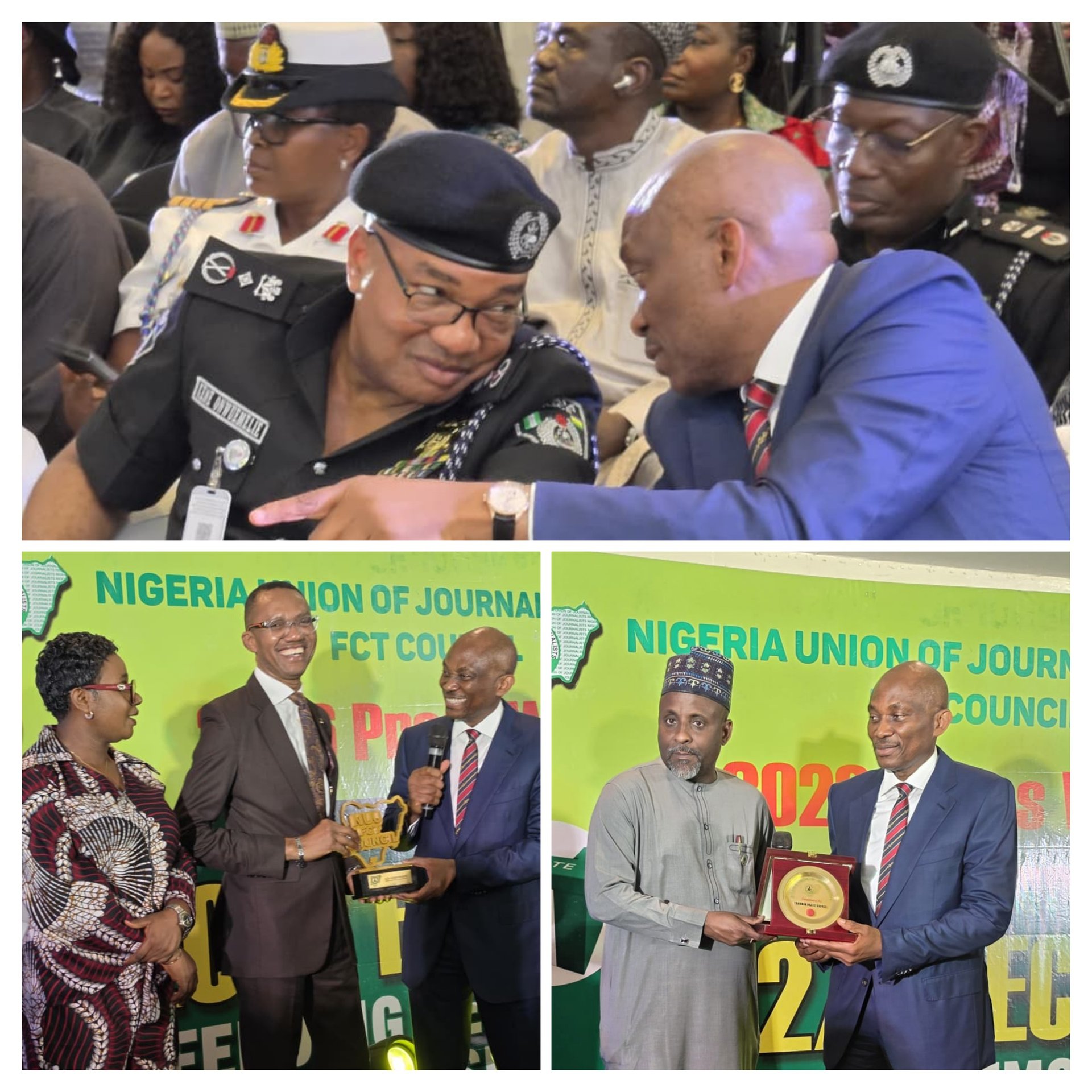
Elumelu delivers keynote address at NUJ FCT press week
KEYNOTE ADDRESS BY RT. HON. NDUDI GODWIN ELUMELU, OON, MINORITY LEADER OF THE 9TH HOUSE OF REPRESENTATIVES, DELIVERED AT THE 2026 NUJ FCT COUNCIL PRESS WEEK HOLDING TODAY, TUESDAY, MAY 19, 2026, AT THE TRANSCORP HILTON, ABUJA PROTOCOLS
Comments (0)
Leave a Comment
No comments yet. Be the first to comment!